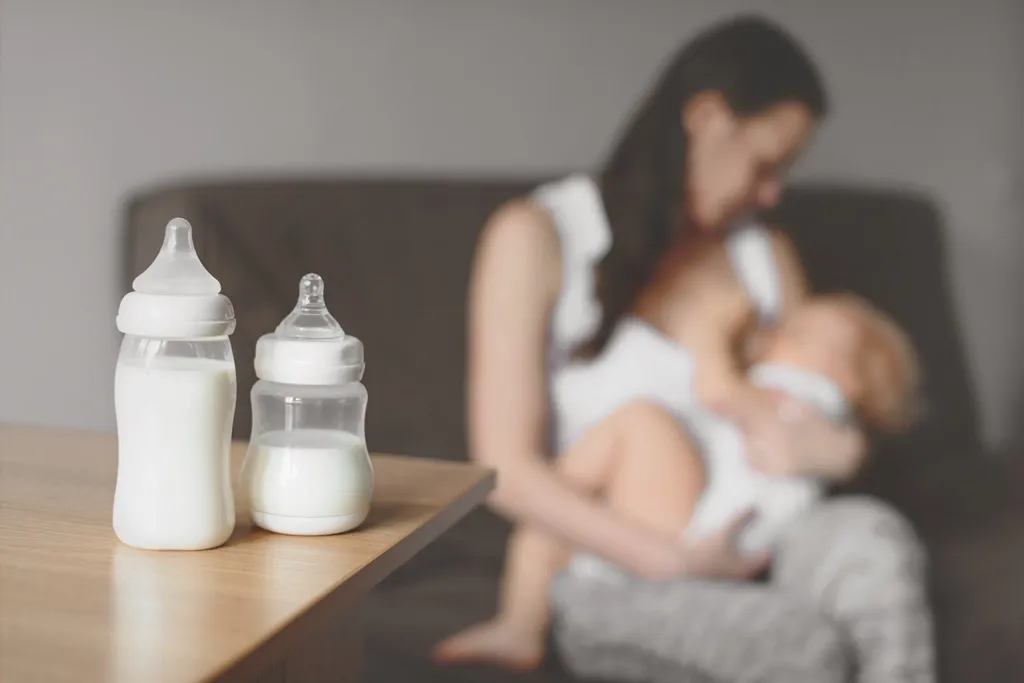


Expressing breast milk can be useful in certain situations, but it is not a mandatory procedure for all mothers. If the baby suckles effectively, gains weight well, and has no feeding issues, additional expressing is usually not needed.
Understanding when and how to express milk correctly helps support breastfeeding and avoid unnecessary discomfort.
When might expressing be necessary?
A doctor or breastfeeding consultant may recommend expressing in the following cases:
- temporary separation of mother and baby;
- premature birth of the baby;
- difficulties with latching onto the breast;
- overfull breasts;
- lactostasis – milk stagnation in the mammary gland;
- the need to create a supply of breast milk.
In each situation, the need for expressing is determined individually.
How to prepare for the procedure?
Before expressing, it is important to create a comfortable environment. This helps stimulate milk release and make the process more convenient.
Helpful tips may include:
- calm surroundings;
- comfortable body position;
- contact with the baby or their photograph;
- a warm shower or warm compress before the procedure;
- gentle breast massage.
Expressing should not cause severe pain. If significant discomfort arises, it is advisable to consult a specialist.
Manual expression of breast milk
Manual expression does not require special equipment and can be helpful in the first few days after childbirth or when it is necessary to quickly relieve fullness in the breasts.
Basic steps:
-
Wash your hands thoroughly.
- Place your thumb and index finger around the edge of the areola.
- Gently press the breast tissue towards the chest wall.
- Rhythmically squeeze and release your fingers.
- Periodically change the finger positioning around the areola.
Strong squeezing of the nipple or rough pressure on the breast can lead to tissue damage.
Using a breast pump
A breast pump can be convenient for regular expressing or creating a milk supply.
Before use, it is necessary to:
- familiarize yourself with the manufacturer's instructions;
- ensure all parts are clean;
- correctly size the breast shield.
During the procedure, it is important to use a comfortable vacuum level. Pain is not a sign of effective expressing.
How to store breast milk:
- Express milk into a clean container or special breast milk storage bags.
- Label the date and time of expressing
- Cool new milk in the refrigerator before adding it to already cooled milk
- Do not mix warm milk with frozen. Store milk in the back of the refrigerator, not on the door
- Freeze in small portions - 60-120 ml, to avoid waste
Defrosting:
- The best method is to transfer the container from the freezer to the refrigerator overnight
- For quick defrosting, place the container under warm running water or in a bowl of warm water. Do not use a microwave
- Do not boil
After defrosting:
- In the refrigerator, defrosted milk can be stored for up to 24 hours
- After warming, it is advisable to use within 2 hours
- Refreezing is not recommended
Storage:
- Room temperature - up to 25°C - up to 4 hours optimally, up to 6-8 hours under very clean conditions
- Refrigerator - ≤4°C - up to 4 days
- Freezer inside the refrigerator at around -15°C - up to 2 weeks
- Separate freezer - around -18°C - optimal up to 6 months
When to consult a doctor
A consultation with a specialist is needed if:
- severe pain occurs during expressing;
- redness or lumps appear in the breasts;
- body temperature rises;
- there are difficulties with breastfeeding;
- questions arise regarding milk supply or expressing techniques
Prices for related services
- Prenatal consultation of a pediatrician/family doctor for care of the baby2590 uah
- Breastfeeding consultation with a doctor at home, outside the city4790 uah
- Consultation with a doctor on breastfeeding at home, in the city4130 uah
- Consultation by a рediatric physician, sector expert in the clinic2330 uah
 15.3К views