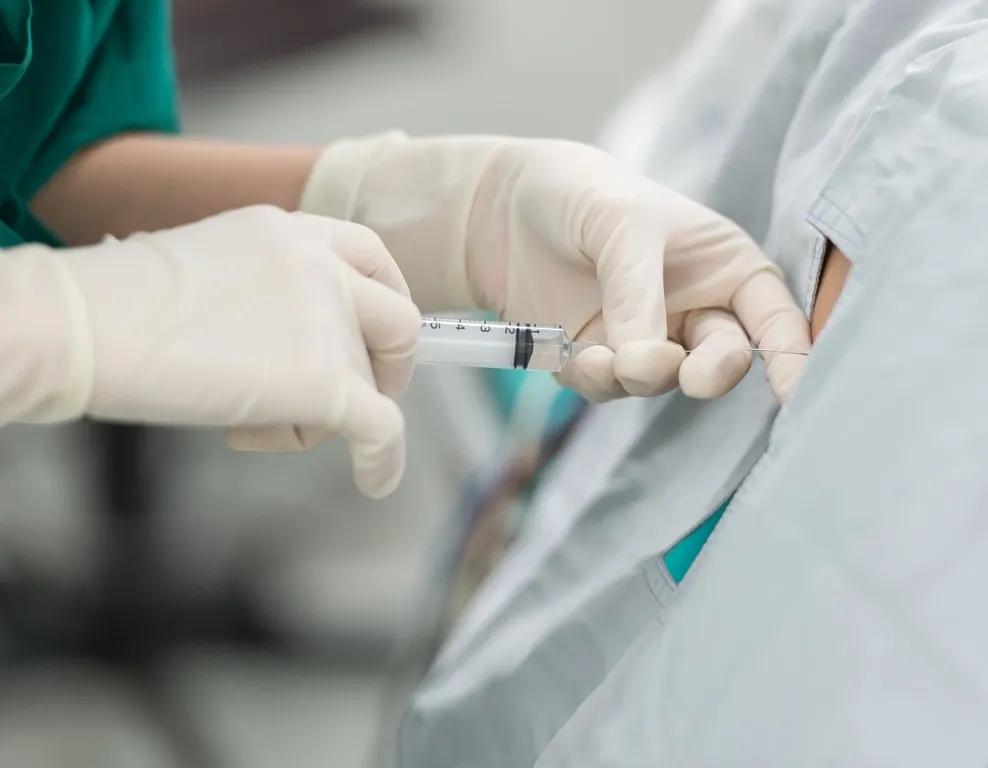

What is a spinal tap, lumbar puncture technique
Lumbar (spinal) puncture is a procedure during which the doctor inserts a special needle into the spinal cord (directly into the subarachnoid space) and withdraws fluid. It is carried out for diagnostic or therapeutic purposes. A clear technique of performing a lumbar puncture will avoid serious consequences and complications, although they are not excluded.
Indications and contraindications for lumbar puncture
This procedure may be performed to diagnose or treat certain diseases. If you need to get accurate diagnostic data, a lumbar puncture is prescribed for:
- detection or exclusion of infection in the cerebrospinal fluid (CSF);
- clarification of indicators of CSF pressure;
- detection of patency of the subarachnoid space of the spinal cord.
In the case of medical measures, a puncture may be necessary to introduce antibacterial agents into the cerebrospinal fluid and get rid of excess cerebrospinal fluid. Indications and contraindications for performing a lumbar puncture are divided into mandatory and conditional. Within the scope of diagnosis and treatment, the considered procedure is shown to be carried out in the presence of:
- any infectious diseases of the central nervous system;
- suspects of leakage of cerebrospinal fluid;
- malignant tumors localized directly in the structures of the spinal cord;
- hemorrhage in the arachnoid membrane.
Spinal fluid puncture is often performed in premature babies, and this procedure can be decisive in establishing a diagnosis. Such "complicated" newborns may have hydrocephalus without pronounced symptoms, and it is the results of the diagnosis that will provide answers to the doctors' questions about the correct diagnosis.
Contraindications for carrying out this procedure for diagnostic or therapeutic purposes:
- severe swelling of the brain with pronounced symptoms;
- high intracranial pressure of known or unknown etiology;
- diagnosed neoplasms of the brain;
- occlusive hydrocephalus;
- problems in the blood coagulation system;
- pregnancy;
- long-term use of anticoagulants.
In some situations, when an accurate diagnosis is required, a spinal tap can be performed despite existing contraindications. For example, the results of a lumbar puncture analysis for meningitis make it possible to establish the type of infectious agent and to choose effective drugs. And if a pathology is diagnosed or suspected in a pregnant woman, then doctors ignore this provision and do everything to save the patient's life.
How a lumbar puncture is performed
This procedure is quite complicated, so it is carried out by an experienced doctor and only after preliminary preparation of the patient. Algorithm of preparation for spinal puncture:
- the skin in the area of future puncture and insertion of a special needle is treated with medical alcohol and lubricated with iodine;
- then novocaine or lidocaine (analgesic drugs) are injected subcutaneously;
- immediately after the formation of the "lemon peel", the introduction of the specified drugs is continued deep into the future puncture.
Many patients wonder if it hurts to do a spinal tap. Unpleasant (but not painful) sensations are possible only during the period of preparation for the procedure, when the doctor administers painkillers.
After preparation, the procedure begins directly:
- The puncture is made between the spinous processes between the 3rd and 4th vertebra (in children - between the 4th and 5th). Some patients panic fear of lumbar puncture due to the possibility of damage to the spinal cord. But the puncture is made where there is simply none! The spinal cord ends between 1 and 2 vertebrae, so there is no such threat to health.
- The doctor inserts a special needle with a device that closes its lumen (stylus) at a small angle. As soon as the needle enters the subarachnoid space, the specialist feels a certain "failure". After that, you can take out the mandrel - liquor will start to come out of the needle.
- If the cerebrospinal fluid does not flow out, the patient is asked to raise the upper part of the body to increase the pressure. If the procedure was carried out often, the doctor may try to take a sample for examination of the cerebrospinal fluid a little higher than the indicated place - fast and successful puncture may be prevented by adhesions.
- If necessary, a special tube is attached to the needle to measure the pressure of the cerebrospinal fluid. But an experienced doctor will make such measurements even without additional tools - the output of cerebrospinal fluid at a rate of 60 drops per minute is considered the norm. The rate of spinal puncture in newborns when measuring pressure will be higher.
Complications and consequences of lumbar puncture
During the first 2-3 hours after the procedure, the patient should be in a horizontal position. A slight discomfort is possible - for example, a headache after a lumbar puncture, which quickly disappears and does not require the use of painkillers. The first 3-4 days you can not lift weights and walk a lot.
Possible complications and consequences of lumbar puncture:
- irritation of meninges;
- persistent pains in the puncture area;
- disc damage and hernia formation;
- bleeding;
- infection of the central nervous system.
More detailed information about the rules of the procedure and the cost of a needle for lumbar puncture can be obtained on the pages of our site Dobrobut.com.
 36.9К views