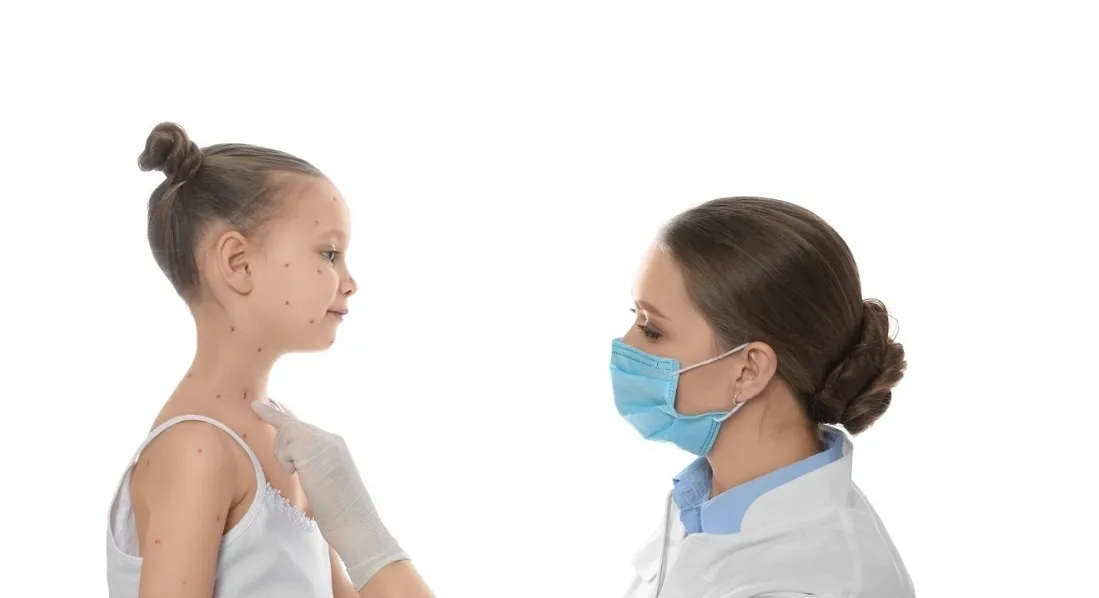


What is chickenpox?
Chickenpox (varicella) is an acute viral disease that most often affects children but can be much more severe in adults. The disease is highly contagious; however, it usually has a relatively mild course in most children.
How is the infection transmitted?
The causative agent is the herpes virus type 3 (Varicella-Zoster).
Modes of transmission:
- airborne (coughing, sneezing);
- close contact with the infected person.
Important: A child becomes contagious even before the rash appears, complicating efforts to prevent the spread of the infection in kindergartens and schools.
Incubation period: from 7 to 21 days (most commonly 10–14 days).
A person remains contagious until all elements of the rash are covered with crusts (usually 5–7 days from the onset of the rash).
Symptoms of chickenpox in children
The onset of the disease is usually acute.
First signs:
- fever (sometimes up to 38–39 °C and higher);
- weakness, lethargy;
- headache;
- loss of appetite.
In children, these symptoms may be mild, while in adults they are much more pronounced.
Characteristic rash
The main symptom of chickenpox is the rash, which has a typical appearance and progression:
How the rash changes:
- red spot;
- papule (thickening);
- vesicle (a blister with clear fluid);
- crust.
Features:
- the rash appears in waves over several days;
- at the same time, there may be elements of different stages on the body;
- localization: face, scalp, torso, sometimes mucous membranes;
- accompanied by intense itching.
Treatment of chickenpox
Specific treatment is not usually required — the body handles the virus itself.
Main recommendations:
- plenty of fluids;
- antipyretics (paracetamol);
- cool, humid air in the room;
- short nails on the child to avoid scratching.
How to reduce itching?
- modern preparations based on calamine;
- antihistamines as needed (only after consultation with a doctor).
What to apply on the rash?
Today, there is no need to use only "green stuff". You can use:
- products with calamine;
- other antiseptic or drying preparations as recommended by a doctor.
What to do if there is a rash in the mouth?
If the mucous membrane is affected:
- soft, non-hot food;
- sufficient liquid intake;
- local agents (as prescribed by a doctor) that reduce pain.
Is it possible to bathe?
Yes, it is possible:
- short shower without scrubbing;
- do not use a washcloth;
- gently pat the skin dry with a towel.
Is it possible to go for a walk?
You can only if:
- the child feels well;
- there is no fever;
- there is no risk of contact with other children (the infectious period is still ongoing).
Is it necessary to lower the temperature?
Yes, if:
- the temperature is high;
- the child is having difficulty coping with it.
Important: do not use acetylsalicylic acid (aspirin) preparations in children.
Can you get sick a second time?
Repeat chickenpox occurs rarely, as immunity is formed after the disease.
However, the virus remains in the body and can manifest in adulthood as shingles.
Chickenpox and pregnancy
If a pregnant woman becomes ill:
- mandatory medical supervision is required;
- in some cases, specialized monitoring is necessary.
Prevention
The most effective method is vaccination.
- vaccination can be done from 9 months;
- 2 doses are needed;
- the vaccine is effective for both children and adults.
When to consult a doctor:
- high fever lasts more than 4 days;
- shortness of breath or severe weakness develops;
- the rash becomes inflamed, or pus appears;
- the child refuses to drink;
- any concerning symptoms are present.
Conclusion
Chickenpox is a common but usually not dangerous disease in children. The main task for parents is to alleviate symptoms, prevent scratching of the rash, and closely monitor the child's condition.
 38.1К views