

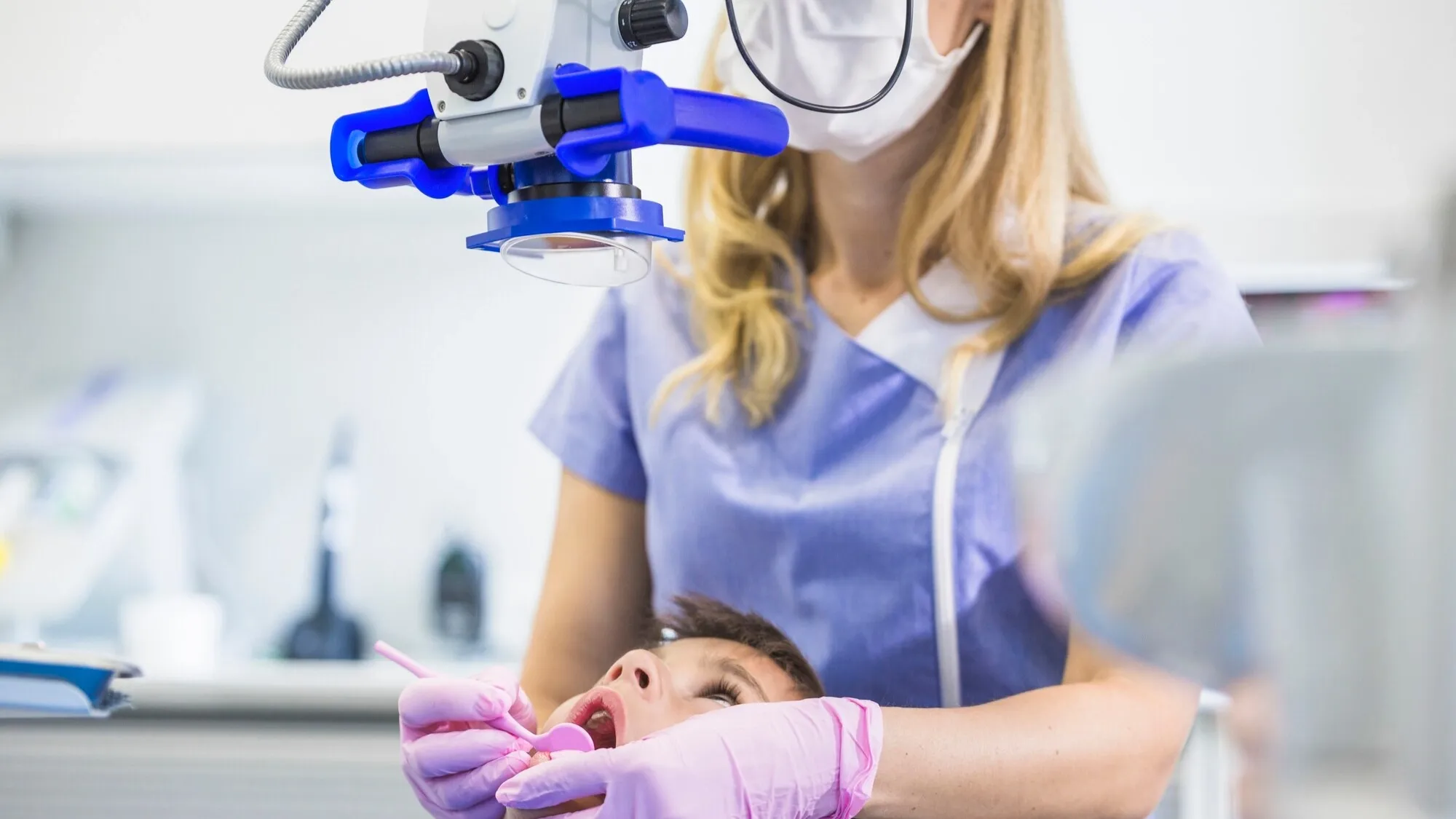

A solitary sore in the mouth after biting or rubbing usually heals on its own within 7–14 days. During this time, you can gently rinse your mouth with a mouthwash, maintain thorough home hygiene, and avoid sharp, hot, irritating, or hard foods. Over-the-counter medications should be used according to instructions, as the choice depends on the cause of the lesion.
However, if the ulcer does not heal for more than two weeks, increases in size, frequently returns, or is accompanied by fever, rash, white coating, or significant swelling, a consultation is required. In cases of difficulty swallowing or breathing, rapid swelling spread, and a sudden worsening of condition, urgent medical attention is necessary.
Prices for related services
How to Distinguish Stomatitis from a Common Mouth Sore
Traumatic injuries most often occur in areas where the mucosa has been bitten, injured by hard food, burned by hot drinks, or due to defects in fillings or poorly fitting crowns, as well as the presence of removable dentures. Usually, it is a single sore in the mouth with a noticeable mechanical cause. Therefore, after removing the irritant, it gradually decreases.
Stomatitis is a broader concept that refers to inflammation of the mucosa of various origins. It can manifest as one or several ulcers, redness, swelling, blisters, plaque, increased body temperature, or burning of the mucosa. Therefore, the question of how to treat stomatitis does not have a single answer, as therapy differs for aphthous stomatitis, herpes, candidiasis, and contact allergic reactions.
Aphthae are typically round or oval, have a light center and a red halo. Herpetic lesions often begin with a group of blisters, while candidiasis may present as white layers. However, it is dangerous to establish a diagnosis based solely on a photograph and the internet.
Aphthae, Injuries, Stomatitis
Aphthous stomatitis usually manifests as painful superficial ulcers on the inner surface of the lips and cheeks, tongue, or soft palate. Small aphthae often heal without forming a scar.
A traumatic ulcer occurs after damage or constant irritation of the mucosa by a broken tooth, edge of a filling, bracket, or prosthesis. However, while the irritant remains, rinsing alone will not be sufficient.
In everyday life, painful sores in the mouth are often referred to as stomatitis, although similar lesions have different origins. Therefore, it is advisable to show them to a doctor. They will assess their number, shape, localization, and duration of the process and then prescribe treatment.
Why Mouth Sores Appear
Common causes of mucosal damage include:
- biting the cheek, tongue, or lip;
- burning with hot food or drink;
- sharp edges of teeth, fillings, crowns, or prostheses;
- friction from braces and other orthodontic devices;
- aphthous, herpetic, or candidal stomatitis;
- gum inflammation, dry mouth, and inadequate hygiene;
- reaction to care products, food, or medications;
- deficiency of iron, folates, or vitamin B12, and some systemic diseases.
If mouth sores occur regularly, they should not be frequently treated with the same remedy. A doctor needs to assess the trauma-causing factors, the state of teeth and gums, medication intake, and accompanying symptoms. Tests are prescribed as needed.
What Can Be Used at Home?
For treating affected areas, antiseptic agents such as mouth rinses, gels, or sprays can be used.
However, when the question arises about what to rinse or treat the sores in the mouth with, it is important to consider their cause. Antiseptic mouthwash helps relieve pain but does not treat herpes, candidiasis, or deficiency states. Alcohol-based rinses may irritate the mucosa, so it is better to avoid them in the presence of painful ulcers.
Chlorhexidine for rinsing is sometimes recommended by a dentist for a short course, but only in certain inflammatory conditions. The concentration, frequency, and duration of its use are determined according to the product's instructions or the doctor's recommendations. It is worth remembering that prolonged uncontrolled use can cause irritation, changes in taste, and staining of teeth and tongue. The solution should not be swallowed, and age restrictions should be checked in the instructions.
Which Ointment or Gel Can Be Applied to a Sore
Products for the mucosa can form a protective film, reduce pain or inflammation, but have different compositions and indications. A regular ointment for stomatitis is not a universal solution, as a medication for a fungal infection will not help with a traumatic aphtha, and an antiviral agent does not treat candidiasis.
For a small traumatic sore, a dentist or pharmacist may recommend applying a dental gel or adhesive paste that is allowed for application on the mucosa. Before use, hands should be washed, and if possible, the area gently dried, then a small amount of the product should be applied according to the instructions. Remember that skin products should not be used on the oral mucosa.
Local anesthetics have age restrictions and contraindications. Precautions should be taken when using products with lidocaine or benzocaine in children. They should not be applied more frequently or in larger quantities than indicated. If the cause of the sore is unknown, the optimal medication should be determined after consulting a dentist.
What Not to Do: Cauterization, Alcohol, Antibiotics
The sore should not be cauterized with alcohol, iodine, concentrated hydrogen peroxide, vinegar, or other aggressive substances. They damage healthy tissues, intensify pain, and may slow healing. Do not peel off the plaque, puncture blisters, or try to cut the edges of the ulcer.
Also, do not self-apply antibiotics, antifungal, or antiviral medications. They work on different causes, have contraindications, and are not needed in the case of a common injury or most aphthae. Pain relief tablets should not be placed directly on the mucosa, as this may cause a chemical burn.
When Home Treatment Is No Longer Enough
Schedule a dental examination if:
- the ulcer does not decrease or heal for more than two weeks;
- the lesion is large, deep, bleeding, or has hardened edges;
- sores frequently recur or many are present;
- there is white plaque, rash, blisters, unpleasant odor, or pus;
- pain interferes with eating or drinking;
- fever, swollen lymph nodes, or severe weakness have appeared;
- the lesion occurred against a background of reduced immunity or a new medication.
In the case of significant swelling of the lips, tongue, or throat, difficulty swallowing or breathing, urgent dental assistance or calling an emergency medical service is necessary. Lesions accompanied by blisters on the skin, inflammation of the eyes, or a sharp deterioration in condition also require urgent evaluation.
If the cause is inflammation of the mucosa, the doctor will determine appropriate treatment for stomatitis. In the case of bleeding, redness, and swelling of the gums, treatment for gingivitis may be required. The treatment plan may involve a therapist dentist, periodontist, pediatric dentist, surgeon, endodontist, orthopedic dentist, and other specialists as needed.
How to Prevent the Appearance of New Sores
Daily clean between teeth and brush with a soft toothbrush without excessive pressure. Movements near the damaged area should be cautious. During exacerbations, avoid very hot, spicy, acidic, and hard foods.
Check the condition of fillings, crowns, prostheses, and orthodontic devices. If there is a sharp edge irritating the mucosa, it is advisable to see a dentist. In the case of recurrent aphthae, check for possible connections with diet, stress, care products, and medication use.
The question of how to treat mouth sores at home should not be reduced to choosing a stronger antiseptic. The best prevention is to eliminate the irritant factor, practice gentle hygiene, eat a balanced diet, and promptly diagnose recurrent lesions.
 6 views